
Search engine optimization (SEO) has long been the cornerstone of digital visibility, but the rise of generative AI is reshaping the landscape. Generative engine optimization (GEO) is emerging as a critical component of modern search strategies. Rather than replacing SEO, GEO complements it, creating a broader framework known as search everywhere optimization. This article explores how GEO integrates with SEO, why it matters, and actionable steps to optimize for both traditional and AI-driven search engines.
What is GEO, and How Does It Fit with SEO?
SEO focuses on optimizing content for traditional search engines like Google and Bing, ensuring websites rank highly for relevant queries. GEO, on the other hand, tailors content for generative AI tools such as ChatGPT, Perplexity, and other large language models (LLMs). While the platforms differ, the core mission remains unchanged: deliver the most relevant, accurate, and user-friendly answers to searchers' questions.
Generative AI search engines provide conversational, synthesized responses, often bypassing the traditional list of links. This shift demands a new approach to content creation and optimization, but it doesn't render SEO obsolete. Instead, GEO extends SEO's principles to AI-driven platforms, ensuring brands remain visible across all search mediums.
Key Similarities Between SEO and GEO
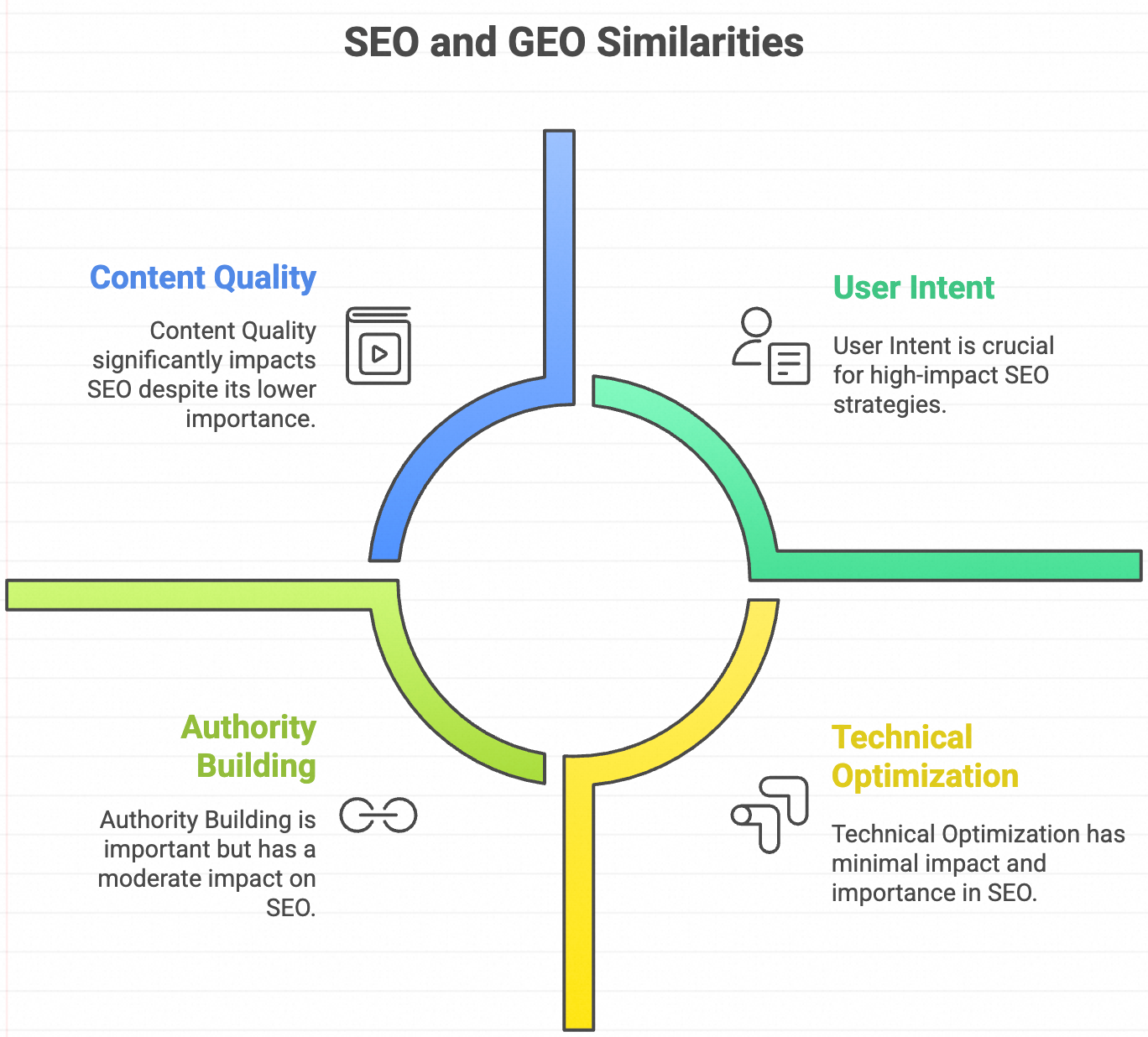
- User Intent: Both prioritize understanding and addressing what users are searching for.
- Content Quality: High-quality, relevant content is critical for ranking and visibility.
- Technical Optimization: Fast-loading pages and structured data enhance discoverability.
- Authority Building: Credibility, through backlinks or brand mentions, boosts trust.
Key Differences
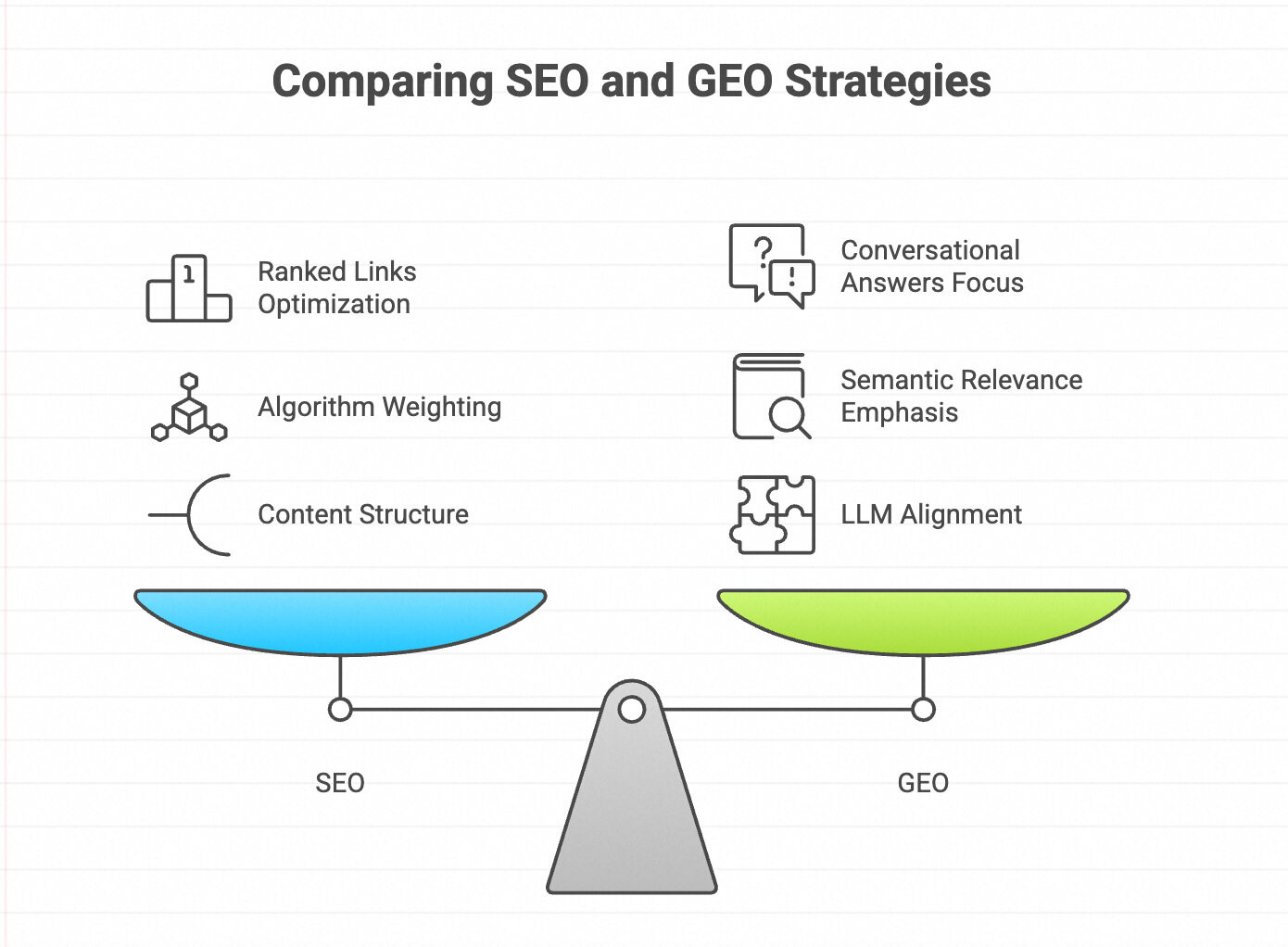
- Response Format: SEO optimizes for ranked links; GEO optimizes for conversational answers.
- Algorithm Weighting: GEO places more emphasis on semantic relevance and contextual understanding.
- Content Structure: GEO favors content that aligns with how LLMs process and summarize information.
Why GEO Matters Now
Generative AI tools are rapidly gaining traction. While they currently account for a small portion of search traffic, their growth is exponential. Experts predict that by 2026, AI-driven search could drive up to 10% of website traffic. Ignoring GEO risks falling behind as users increasingly turn to AI tools for quick, conversational answers.
Moreover, traditional search engines like Google and Bing are already embedding AI into their algorithms. Features like featured snippets, knowledge panels, and AI-generated summaries blur the line between "traditional" and "AI" search. Optimizing for GEO ensures your content is ready for this converged future.
Actionable Strategies for Combining SEO and GEO
To stay ahead, businesses must integrate GEO into their existing SEO workflows. Here are practical steps to get started:
Content Optimization
- Focus on Topics, Not Just Keywords: Research user intent to create comprehensive, topic-driven content that answers questions conversationally.
- Incorporate Structured Data: Use schema markup for FAQs, tables, and statistics to make content easily parsable by LLMs.
- Add Credible Sources: Cite reputable references to enhance authority and improve the likelihood of being cited by AI tools.
- Create Interactive Elements: Unique data, calculators, or tools can differentiate your content and encourage direct visits.
- Regularly Update Content: Refresh underperforming pages and maintain content recency to align with AI's preference for up-to-date information.
Technical Optimization
- Ensure Crawlability: Use robots.txt and llms.txt to guide AI crawlers, ensuring your content is indexed properly.
- Optimize for Speed: Fast page load times and efficient rendering improve user experience and AI retrieval.
- Enhance Multimedia: Include descriptive alt tags for images and transcripts for videos to make multimedia content accessible to LLMs.
- Implement RSS Feeds: Feeds for blogs and news signal recency and improve indexing by AI systems.
Authority and Visibility
- Leverage Social and Forum Platforms: Distribute content on platforms like Reddit, X, and Quora, where users search and AI tools pull data.
- Build Internal Linking: Connect to evergreen and high-value pages to boost relevance and authority.
- Monitor Brand Mentions: Track how your brand appears in AI-generated responses and adjust strategies to increase visibility.
The Role of Social and Forum Search in GEO
Users increasingly turn to social platforms and forums for answers, and these platforms are becoming key inputs for generative AI. Optimizing content for visibility on X, Reddit, or Quora can amplify your presence in AI responses. For example, a well-crafted Reddit thread discussing your brand could be cited by an AI tool, driving traffic and credibility.
To capitalize on this, ensure your content is shareable, engaging, and optimized for the conversational tone of these platforms. This multi-platform approach aligns with the search everywhere philosophy, ensuring your brand is discoverable wherever users are looking.
The Future of Search Everywhere Optimization
The evolution of search is accelerating, driven by new technologies and user behaviors. Here's what to expect:
Emerging Trends
- Voice Search Growth: AI voice assistants in cars, TVs, and wearables are creating new search contexts. Optimize for conversational, location-specific queries (e.g., "nearest pet-friendly café").
- Agentic AI Systems: These semi-autonomous assistants will handle complex tasks, requiring SEO pros to optimize for action-oriented queries and integrate with development teams to build branded agents.
- New Search Verbs: Just as "Google it" defined a decade, new phrases like "Ask AI" may emerge as AI tools gain cultural traction.
Preparing for the Future
To thrive, SEO professionals must:
- Continuously learn how LLMs process and rank content.
- Experiment with GEO strategies and share insights across teams.
- Build reporting dashboards to track AI-driven traffic and performance.
- Advocate for GEO as a core part of digital marketing, aligning with broader business goals.
Conclusion
GEO isn't a replacement for SEO—it's an evolution that expands its scope. By integrating GEO into your SEO strategy, you can ensure your content remains visible and relevant across traditional and AI-driven search platforms. The future of search is multi-platform, multi-modal, and AI-powered. Embrace search everywhere optimization today to stay ahead of the curve and deliver the answers users seek, no matter where or how they search.